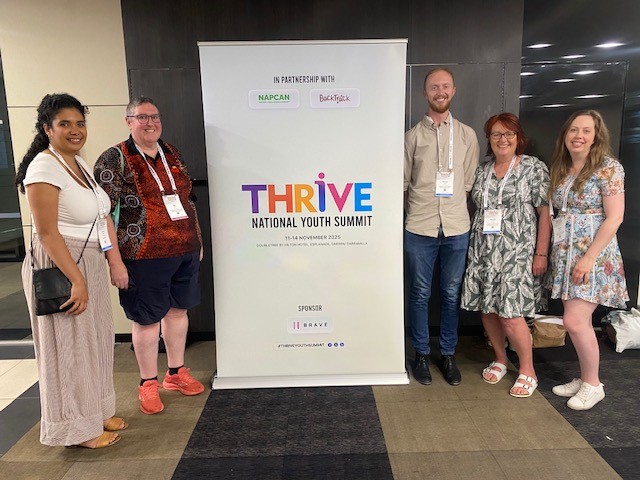
Young people in Australia are facing unprecedented challenges. Earlier this month, Anglicare team members from Liverpool, Canberra, and Wagga Wagga joined experts, policymakers, and young leaders in Darwin for the Thrive National Youth Summit—the first event of its kind in Australia. The summit tackled alarming trends in youth wellbeing and explored practical, community-driven solutions to support young people nationwide.
The statistics shared by leading experts were confronting and underscored the scale of the crisis:
- 50% increase in the prevalence of mental illness in young people over the past 15 years
- 62% of young people have experienced some sort of abuse
- 25% of young people have experienced sexual abuse
- 44% of young people have experienced Domestic and Family Violence
“Working in the youth sector, we have known anecdotally that the issue is growing, but it was still stark seeing the statistics backing that up. It is clear that it is now an epidemic” said Canberra-based Anglicare Youth Worker, Nat Oliver.
Professor McGorry, one of the keynote speakers, identified five global megatrends contributing to youth mental ill-health: the growing socio-economic gap, social media pressures, climate concerns, the housing crisis, and the lasting impacts of the COVID-19 pandemic. And for vulnerable young people, these factors elevate existing challenges.
As Anglicare’s youth workers know, young people rarely present with a single issue. Instead, they face interconnected challenges such as family instability, substance use, housing insecurity, and unemployment.
Despite the weight of these issues, Anglicare’s delegates left the summit inspired and equipped with practical strategies. A common takeaway was the importance of listening to young people and incorporating their voices at every stage of service delivery.
“I was inspired by some of the young people who participated in the conference or shared their stories. One in particular was a young woman who was connected to a housing support service. Hearing the huge impact that one service had on her was incredible. I also really appreciated hearing from services as to how they involved young people into the design of their programs and the various creative ways to encourage young people to engage”, said Kiara Soares, Team Leader of Anglicare’s CYCLOPS young carer program.
Sam Boyle, Program Manager for Anglicare’s Youth Initiative program in southwest Sydney agreed. “The strongest takeaway for me”, he said, “was the clear call for genuine co-design with young people. It’s not enough to invite them into the room; their voices must shape decisions, priorities, and outcomes. This shift away from tokenism is essential for building trust and ensuring youth initiatives are truly relevant.”
For Jennifer English, an Anglicare Youth Case Worker based in Wagga Wagga, the summit reinforced the importance of human interaction and connection (beyond digital), which she will build upon in her own work. “Young people still need and crave interaction beyond the digital. The conference gave me useful tools and motivated me to spend more one-on-one time with the young people I work with”, she said.
The summit also highlighted the critical importance of continuity of care. For young people—particularly those with a history of trauma and abuse—long-term, consistent support from the same program can dramatically improve outcomes.
Like many community service organisations, Anglicare, receives government funding for a portion of its youth programs. This dependency can impact scope and create vulnerability when funding priorities shift—underscoring the need for sustainable investment in programs that young people depend on.
Looking ahead, Anglicare remains committed to amplifying young voices and co-designing services that truly reflect their needs. By listening, collaborating and acting together, we can enhance our impact and improve outcomes for young Australians.
Visit our Youth and Family Services page to learn more about our programs.